Static vs Dynamic Website: Which Is Better for Small Businesses ?
In today’s digital-first world, a business website is no longer optional—it’s essential. Whether you run a local shop, a startup, or a growing service-based company, your website often becomes the first interaction customers have with your brand. One of the most common questions small business owners ask before building a site is:
Should I choose a static website or a dynamic website?
Both options have their advantages, limitations, and ideal use cases. Choosing the wrong one can affect your website performance, user experience, scalability, and even your SEO results. In this detailed guide, we’ll break down the difference between a static website and a dynamic website, compare them across key business factors, and help you decide which is best for your small business.
What Is a Static Website?
A static website consists of fixed web pages written primarily in HTML, CSS, and sometimes basic JavaScript. Each page displays the same content to every visitor unless the code is manually changed.
Key Characteristics of a Static Website
- Content does not change automatically
- No database connection
- Pages load directly from the server
- Requires manual updates for changes
Example Use Cases
- Small business brochure websites
- Personal portfolios
- Landing pages
- Company profile websites
Advantages of a Static Website
1. Faster Loading Speed
Static websites load extremely fast because there’s no server-side processing or database queries. Speed is a major ranking factor for Google and directly impacts user experience.
2. Lower Development Cost
Since static websites are simpler to build, they are usually more affordable. This makes them ideal for startups and small businesses with limited budgets.
3. Better Security
With no database or complex backend, static websites are less vulnerable to hacking, malware, and data breaches.
4. SEO-Friendly Structure
Clean code, fast load time, and minimal complexity help static websites perform well in search engine rankings when optimized properly.
5. Easy Hosting
Static websites can be hosted on almost any server, including low-cost shared hosting or even free hosting platforms.
Limitations of a Static Website
- Not suitable for frequent content updates
- No advanced functionality like user login, dashboards, or real-time updates
- Requires technical knowledge for content changes
- Limited scalability for growing businesses
What Is a Dynamic Website?
A dynamic website generates content in real time using server-side technologies such as PHP, Python, or JavaScript, along with a database. Content can change automatically based on user interaction, time, location, or data input.
Key Characteristics of a Dynamic Website
- Connected to a database
- Content updates automatically
- Interactive and feature-rich
- Often built using CMS platforms like WordPress
Example Use Cases
- E-commerce websites
- Blogging platforms
- Membership portals
- Business websites with frequent updates
Advantages of a Dynamic Website
1. Easy Content Management
With a CMS like WordPress, even non-technical users can update content, add blog posts, upload images, and manage pages easily.
2. Advanced Features & Functionality
Dynamic websites support:
- Contact forms
- Online booking
- Payment gateways
- User accounts
- Chat systems
3. Scalability
As your business grows, a dynamic website can easily expand with new pages, features, and integrations.
4. Better User Engagement
Personalized content, interactive elements, and real-time updates improve user experience and engagement.
5. Ideal for Content Marketing
If blogging and SEO content are part of your growth strategy, a dynamic website is far more efficient.
Limitations of a Dynamic Website
- Higher development and maintenance cost
- Slower loading speed if not optimized
- Requires regular updates and security management
- More vulnerable to cyber threats if poorly maintained
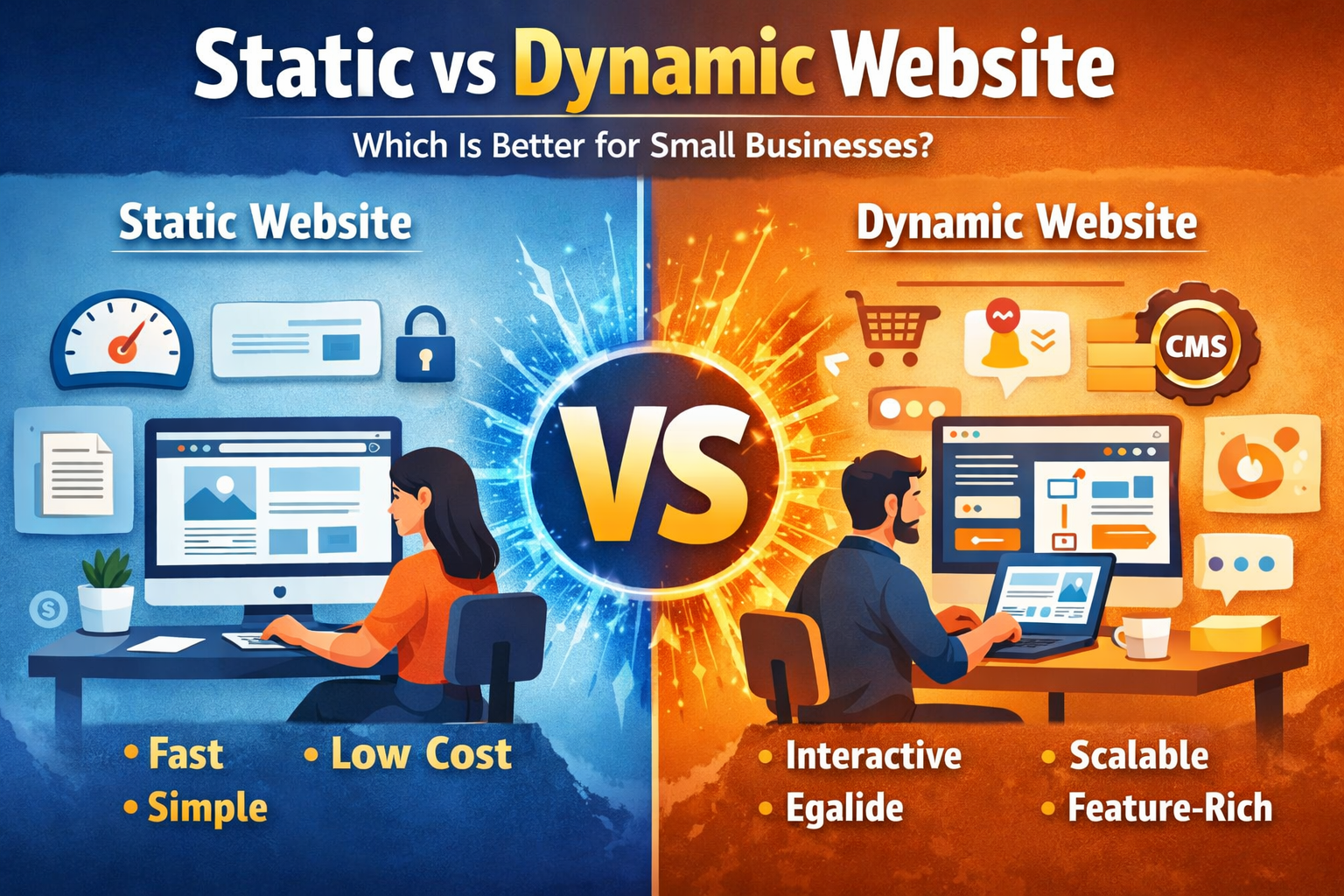
Static Website vs Dynamic Website: Key Differences
Feature Static Website Dynamic Website
Content Updates Manual Automatic
Speed Very fast Moderate to fast (with optimization)
Cost Low Medium to High
Scalability Limited High
SEO Potential Good Excellent
Maintenance Minimal Regular
Security Very high Depends on management
User Interaction Basic Advanced
n brands.
Which Website Is Better for Small Businesses?
The answer depends on your business goals, budget, and future plans.
Choose a Static Website If:
- You need a simple online presence
- Your content rarely changes
- You have a tight budget
- You want fast performance and high security
- Your website is mainly informational
Best for:
Local service providers, consultants, small shops, startups, and portfolio websites.
Choose a Dynamic Website If:
- You plan to update content regularly
- You want to run blogs for SEO
- You need advanced features
- You want to scale your business online
- You plan to generate leads or sell products
Best for:
Growing businesses, e-commerce stores, agencies, and content-driven brands.
SEO Perspective: Static vs Dynamic Website
From an SEO standpoint, both static and dynamic websites can rank well if optimized correctly. However, dynamic websites often have an advantage due to their ability to support content marketing, blogging, and automation.
Static Website SEO Strengths
- Faster page speed
- Clean URL structure
- Lower technical SEO issues
Dynamic Website SEO Strengths
- Easy content updates
- Blogging for keyword targeting
- Better internal linking
- Advanced schema and SEO plugins
For long-term organic growth, a dynamic business website usually delivers better results.
Cost Comparison for Small Businesses
Static Website Cost
- Development: Low
- Hosting: Very low
- Maintenance: Minimal
Dynamic Website Cost
- Development: Medium to High
- Hosting: Moderate
- Maintenance: Ongoing
While static websites are cheaper initially, dynamic websites often provide better ROI as your business grows.
Hybrid Approach: Best of Both Worlds
Many modern small businesses use a hybrid website—a dynamic platform with static-like speed using caching, CDNs, and optimized frameworks. This approach delivers performance, flexibility, and scalability together.
Final Verdict: Static or Dynamic Website?
There is no one-size-fits-all answer. The best website for your small business depends on where you are today and where you want to go tomorrow.
- If you want simplicity, speed, and affordability, go with a static website.
- If you want growth, engagement, and long-term digital success, choose a dynamic website.
For most small businesses planning to grow online, a dynamic business website is the smarter long-term investment.
Conclusion
Your website is not just a digital brochure—it’s a powerful business tool. Understanding the difference between a static website and a dynamic website helps you make an informed decision that aligns with your goals, budget, and growth strategy.
If you’re serious about SEO, lead generation, and future scalability, investing in the right website structure today will save time, money, and effort tomorrow.